Mindful Eating
Break the cycle of emotional and mindless eating with evidence-based techniques.
This content is educational and based on our interpretation of published research. See our Terms of Service for important disclaimers.
Why Mindful Eating Matters
Research suggests that up to 75% of overeating is driven by emotions rather than physical hunger. Stress, boredom, anxiety, and loneliness can all trigger the urge to eat when our bodies don't actually need food.
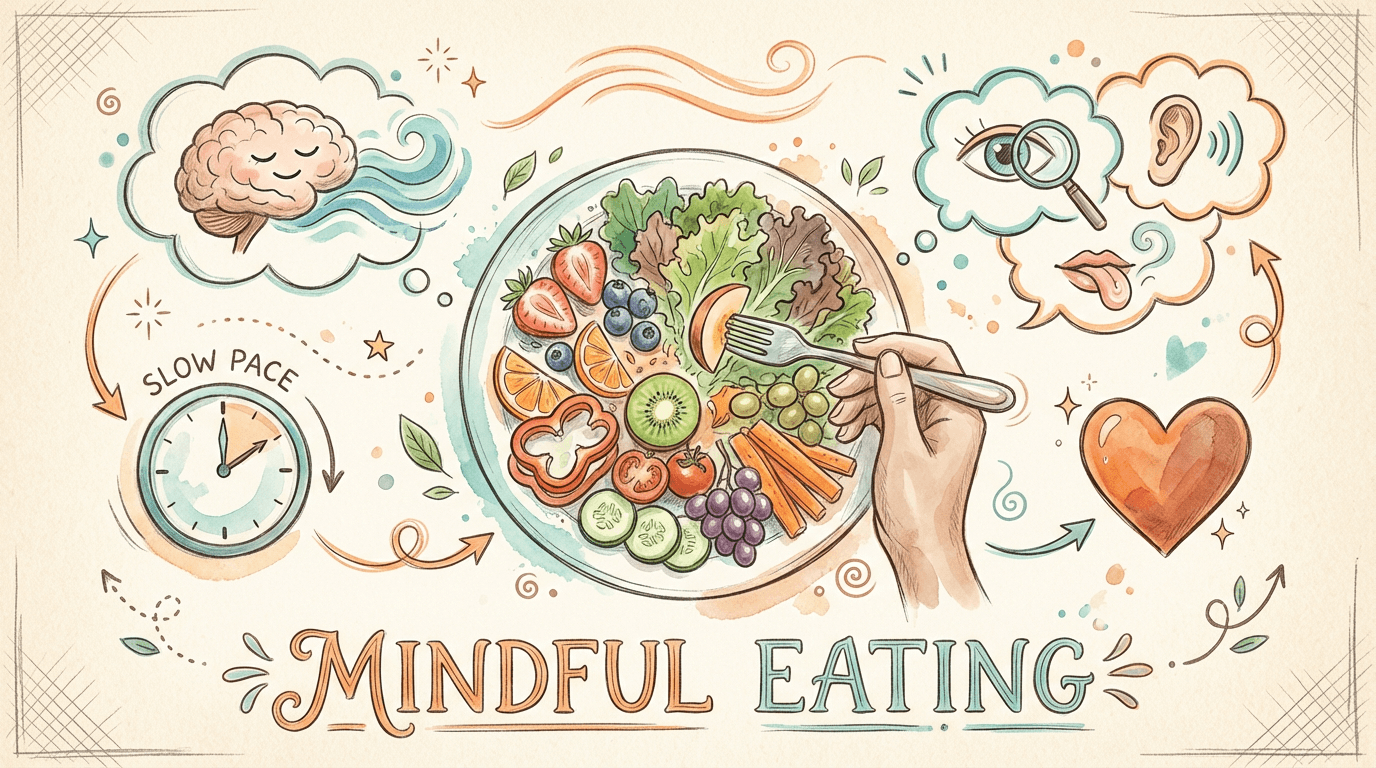
Mindful eating isn't about dieting or restriction-it's about bringing awareness to your eating experience. According to the British Dietetic Association, mindful eating focuses on being fully present while eating and increasing awareness of your thoughts, senses, and feelings. By understanding your triggers and learning to pause before eating, you can develop a healthier relationship with food.
The Pause Approach
Our Pause tool is designed around a simple but powerful idea: interrupt the autopilot. When you feel the urge to eat, taking just 60 seconds to pause, identify what you're really feeling, and choose your response can break the cycle of emotional eating.
Explore the Topics
Understand why we eat when we're not hungry and how to recognise your triggers.
When eating feels out of control-understanding binge eating and when to seek help.
Practical strategies for eating with awareness and enjoying food more fully.
The science of habit change-how to rewire automatic eating patterns.
How our evidence-based pause flow helps you break the autopilot.
Mindful eating tools are helpful for everyday emotional eating, but some situations require professional support. Please reach out to a healthcare provider if you:
- Feel eating is out of control
- Eat in secret or feel ashamed
- Use food to cope with trauma
- Have thoughts of purging
- Restrict food severely
- Experience significant weight changes
Break the autopilot in 60 seconds
Private • No account • Works offline
The Pause tool guides you through naming your emotion, surfing the urge, and choosing how to respond-all in about a minute. Over time, you'll build awareness and break old patterns.
Tip: Use it whenever you feel the urge to eat but aren't sure if you're hungry.
Complementary Practice: Intermittent Fasting
Mindful eating and intermittent fasting work well together. Fasting provides structure, while mindful eating helps you make better choices during eating windows.
Explore Fasting Zones